C103 - The Semiotics of Advertising
Week 13, Asynchronous Bundle 14
Written assignment due Friday 11/21 at 11:59 pm
Introduction
- Goal: Further exploration of intertextuality by considering how other works make intertextual reference to the great 1925 Russian silent film Battleship Potemkin.
- Textbook connection: Chandler, chapter 6, esp. 253-62.
Asynchronous material
Q1-4:
- Sergei Eisenstein's 1925 silent Russian film Battleship Potemkin is one of the most famous films of all time.
- Here is a short video in which I provide some background for the film clip.
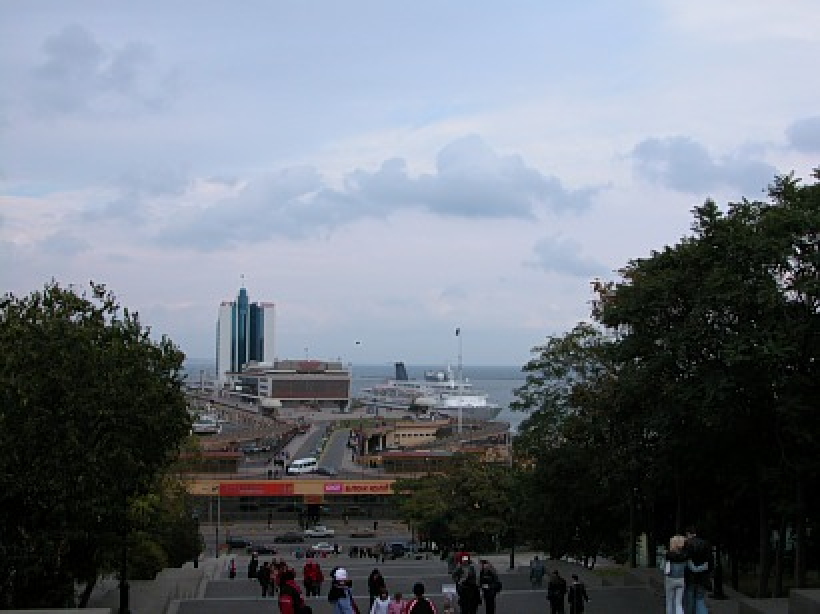
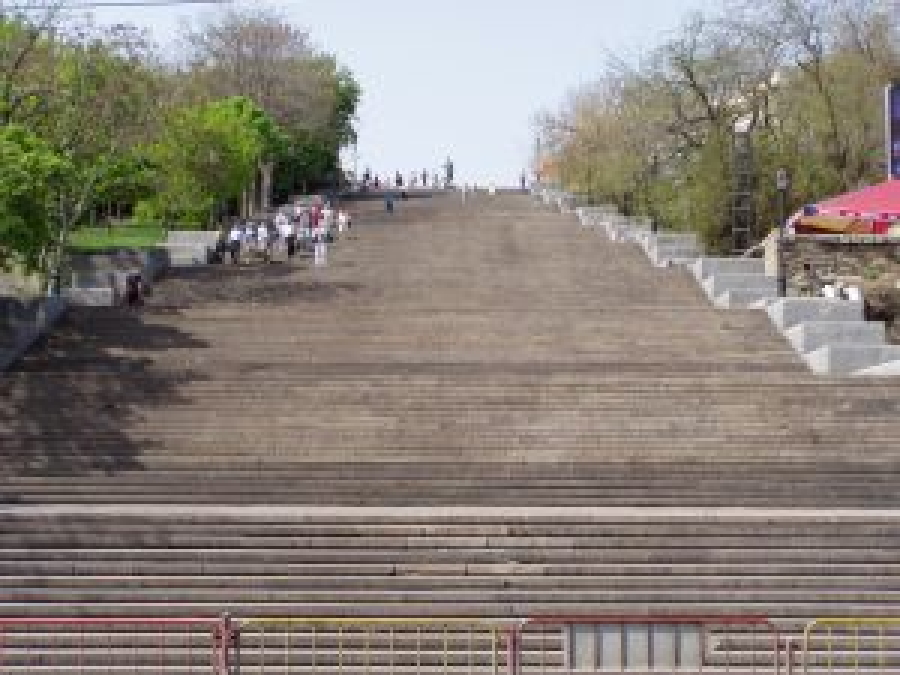
- Here are two views of the steps leading down to the waterfront in the Ukrainian city Odessa
- From the top looking
down
- From the bottom
looking up
- The steps (completed in 1841) feature an optical illusion to make
the stairway look even larger than it is (the lower steps are wider
than the upper ones, with a gradual increase from 12.5 cm to 21.6
cm wide as you descend
- Here is an extended clip from the movie, beginning a bit before the Odessa Steps sequence begins. Note that it was a silent film; the music provided here was paired with the film some years later.
- The scene gains its power from the montage style of editing: a series of both static and
motion shots which together form a tense and powerful sequence, one in which
the whole is certainly greater than the sum of its parts
- The montage editing functions by exploiting syntagmatics, elevating it
to an art form. And the device of rapid cutting between separate, rather
static shots is very familiar to us.
- The shower scene from Psycho is another famous example of montage film editing.
- So first watch this sequence, then you will see some later works that interact
with it intertextually.
- You can download the entire film (legally) in several formats
from:
- Here is a good online essay about the film by the late Chicago Sun-Times critic Roger Ebert, for anyone who wants to read more about this film
- Here is a second short video in which I point out some things to notice about the original source.
- Here are a few scattered observations keyed to the timing of this clip.
- Note that the acting here is pretty raw. No professional actors appear in this entire sequence, and there are some surprisingly odd bits (keep an eye out for these yourselves).
- 0:18 We first see a large crowd of townspeople arrayed on the Odessa Steps.
- 1:17 Notice the contrast between the fancy lady and the legless beggar. BTW we will see her umbrella or parasol again later.
- 1:30 This boy and his mother will be important later.
- 2:02 Our first sight of the soldiers
- 3:48 Weird continuity error: when the boy is shot, his mother continues on past him down the steps. But when she approaches him here, she is coming down the stairs, meaning that she must have somehow gotten above him on the staircase.
- 6:05 Cossacks were basically mercenaries, usually outfitted as cavalry.
- 6:37 Here comes the famous baby carriage!
- Now let us consider a couple of striking examples which relate intertextually to Potemkin.
- My favorite here is from Brian De Palma's The Untouchables:
- Brian De Palma imitated the Odessa Steps sequence in The Untouchables (1987) in a scene where Kevin Costner, playing Eliot Ness, and his companions
are waiting to ambush several mobsters at a train station in Chicago.
- The clip provided here runs from 122:45 to 130:05.
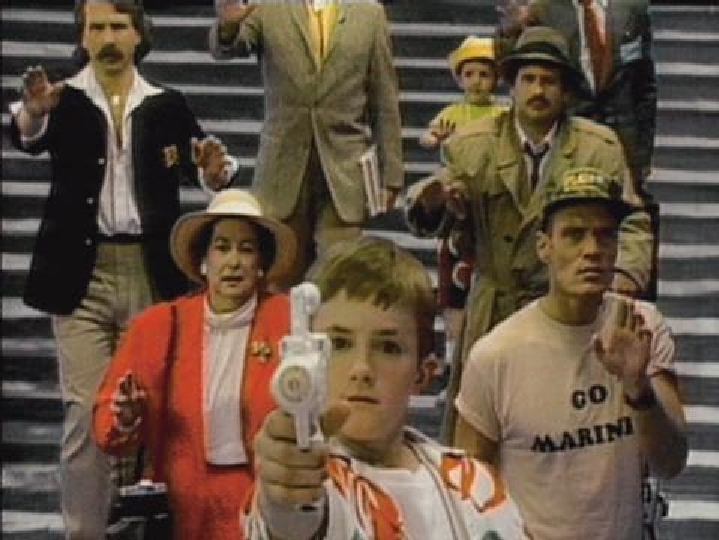
- (From the sublime it isn't so far to the ridiculous) The
Naked Gun 33 1/3 (clip provided here runs from 0:00-3:43)
- The next film uses the Potemkin source material for more artistic purposes
- 1999 Korean film Nowhere
to Hide (Injeong sajeong bol geot eobtda). This clip runs 5:28-8:30
in the film, though I've edited in a few seconds from the opening credits just to identify the film clip. (This scene is not characteristic of the film as a whole; the movie is basically an undistinguished police procedural.)
- Here's a compilation of a dozen or so clips derived from Potemkin, including the original and the Untouchables, but some additional ones, if you are interested.
- Here is a (not comprehensive but representative) list
of films that quote intertextually or otherwise interact with the Odessa
Steps sequence from Potemkin
- Here is a piece
of visual art from the Museum of Modern Art called "Psychedelic invasion of battleship 'Potemkin' into the tautological hallucinosis of Sergey Eisenstein" which combines shots from
Potemkin with other shots added by the Ukrainian artist Alexander Roitburd. (This link takes you to a page at the MOMA about Roitburd's work, but the link to a video clip from the actual film is dead there.)
- The Polish filmmaker Zbigniew Rybchynski made a short (29 minute) film
called Steps in which he edits a group of American tourists into
the Odessa steps sequence from Eisenstein.
- There are four questions to be answered relating to intertextual relations with Potemkin.
- At a minimum, you must watch the original clip from Potemkin, and the three follow-up clips from The Untouchables, The Naked Gun 33 1/3, and Nowhere to Hide. Other clips here are definitely interesting too, and I recommend looking at them, but the homework does not ask about them.
- Q1. [4 points] I personally consider this scene from The Untouchables a mini-masterpiece. Tell us what it draws upon in the original scene, and how it uses that source material to increase the tension. Please cite as many details as you can. There are also a few additional details that no doubt reference Potemkin, but primarily just as homage to the original, not because they have any special function in this scene. Point out at least one such detail.
- Q2. [4 points] The comedy film The Naked Gun 33 1/3 primarily parodies the scene from The Untouchables; cite at least three details where it makes fun of or plays around with this source. But it also refers back to the original Potemkin as well; give at least one such detail which harkens back to that earlier film.
- Q3. [4 points] Nowhere to Hide has a more subtle and nuanced take on the relation between the stone staircase and the violence in the scene. Identify at least three details which clearly reference points from Potemkin. And try to identify one way in which it departs sharply from the original.
- Q4. [4 points] The pop song that plays through the second half of this clip from Nowhere to Hide (a 1967 song "Holiday" by the Bee Gees, an Australian pop group whose greatest success was in the U.S.; they are best known because their music was used throughout the 1977 movie Saturday Night Fever) seems out of place with the violence in the scene. Tell us why you think the director used this particular piece of music to go with this scene.
Q5:
- Many of you will have seen John Hughes's 1986 film Ferris Bueller's Day Off, about a high school student taking a fake sick day from school in suburban Chicago.
- If you are not familiar with it, try watching the original trailer from 1986 and/or a more recent version of the trailer that Netflix made to advertise the film to a younger audience on its streaming service.
- This film is highly reflexive in that Ferris Bueller frequently breaks the "fourth wall" by directly addressing the audience. You can see a bit of this in the trailers I've linked to, but I've also posted a clip where he looks at the audience and addresses them directly at the very beginning of the movie, followed by a longer bit where he addresses the audience at the end of the credits (25 years before the Marvel movies started embedding meaningful material in the credits).
- Here are two ads from recent Superbowls which have an intertextual relationship with this film:
- Q5. A general question is, do you think that ads like these two are worth making or not? Sub-questions you might address include, but are not limited to: do the ads really make valid intertextual use of the source material, or are they just using it as fan service, letting viewers go ooh and aah when they recognize scenes from the source? The actor Matthew Broderick is really showing his age here; does that matter to the effectiveness of the ads? Do you think that one of these two ads markedly worse/less effective in handling the intertextuality than the other?