C103 - The Semiotics of Advertising
Week 6, Asynchronous Bundle 16
Written assignment due Friday 8/1 at 11:59 pm
Introduction
- Goal: Initial exploration of ideological codes in advertising
- Textbook: Chapter 181-190
Asynchronous material
- The use of a code in advertising may be direct (take the code seriously
and at face value) or indirect (stand aside from the code, acknowledging
it but not accepting it, often with irony).
- Direct use of codes
- Sexism
- Let's define this as ads which embrace an unarticulated code which says women exist for the purpose of satisfying men, whether sexually, aesthetically, through household work, or whatever else might be relevant. The reverse is also possible, but much less common. (Remember an audio clip we listened to early in the course, in which the fashion designer Tom Ford described himself as an "equal opportunity objectifier" in the context of use a full frontal male nude in an ad.)
- A common type of sexist ad is one which involves gratuitous sexy shots of women, such as this 2015 Superbowl ad for Hardees/Carl Jr.
- Or here is an actual 2016 billboard ad for a gym club
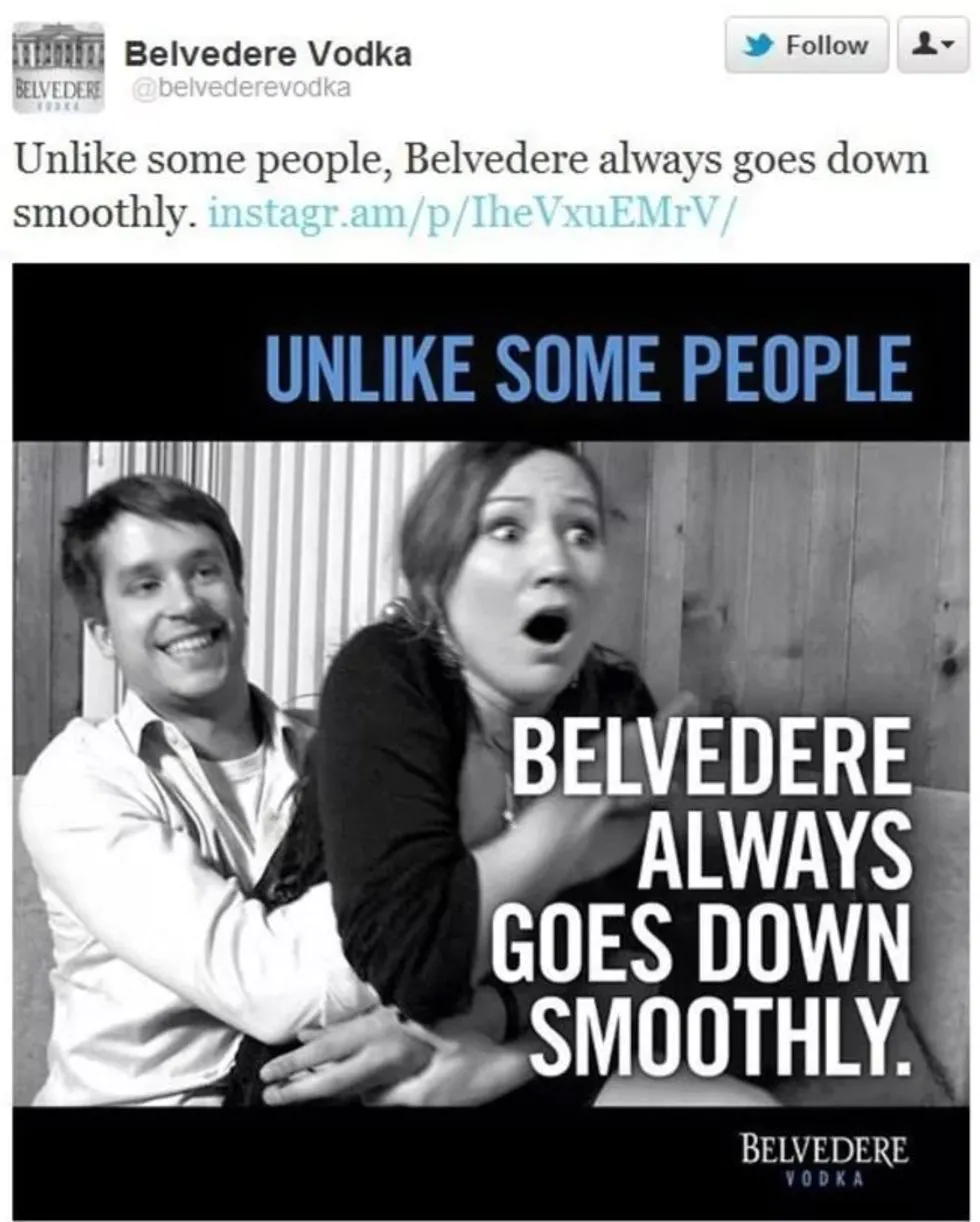
- Perhaps worse is an ad like this Twitter ad for Belvedere Vodka (2012), which makes a kind of joke about forcing a woman to perform oral sex, with the implication that plying her with vodka will make her more compliant.
- I find it incomprehensible that anybody could think that ad is a good idea as recently as 2012. God help us if they were right. However, your opinion may differ. So:
- Q1-2. Leaving aside any possible counter-reaction to "wokeness" in our culture, do you think this kind of direct sexism aimed at women is defensible in advertising? Could it be effective with any segment of the audience? Would positive reaction to these ads potentially outweigh negative reactions? If you are female, what do you think of such advertising? If you are male, what do you think, and do you expect your reaction to be the same as a typical female reaction?
- Going back further in time, the presentation of sexist attitudes toward women becomes more direct and ubiquitous
- Here's a very famous (infamous, really) 1972 ad for Geritol (a vitamin and mineral supplement, mostly containing iron). I've been looking for this for 20 years and finally found it for last year's edition of this course.
- This particular ad was immediately despised and made fun of throughout the culture (and it was harder in 1972 for that to happen than it is today).
- When I was looking for this old ad, I ran across the following text on the internet, which allegedly was the text of this ad. I kind of doubt it, as it seems too exaggerated to have ever been in that sort of ad. But I offer it as a specimen of how the public remembers this ad!
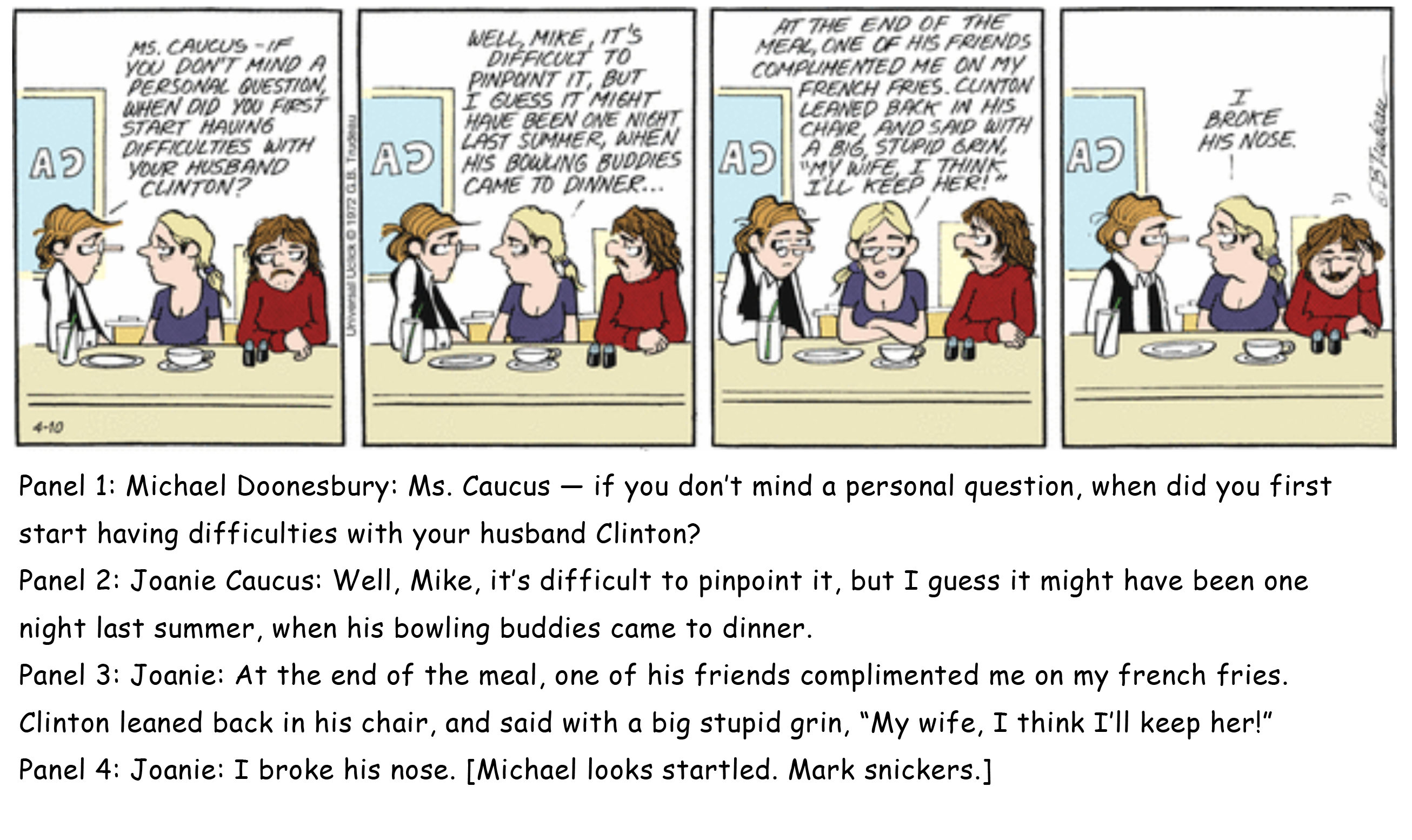
- Here's an early Doonesbury cartoon making fun of it
- Or here's a country song by Mary Chapin Carpenter building upon the idea in that Geritol ad. [It's enough to play the first 1:30, through the first rendition of the chorus]
- Q3. Could an ad like the 1972 Geritol ad be made today? Why or why not? What would happen if someone really did release a similar ad today?
- Here are some great Nike ads that exploit a variety of codes, primarily one that Nike has constructed its entire image upon.
- Nike "Tag" (this is a very great ad by my favorite admaker Frank Budgen)
- Nike "Autograph" (As far as I know, the athlete in this ad is not a major star/celebrity; at least I don't recognize him).
- Nike Marion Jones Racing series (this stars a great female sprinter, though she was later banished from track & field competion for using performance-enhancing drugs)
- This starts with a single "Beginning"
- And it is followed by any of seven interchangeable endings for the video:
- Here's a youtube link which includes the beginning and all the continuations. (I can't seem to download and save that one, for some reason.)
- Nike "Shade Running" ad. Another great one in the same spirit. (I gotta say, as a group Nike ads are probably my absolute favorites.)
- Q4-5. What is the common theme of all these ads, i.e., what does Nike believe that its customers want from using their products? What specific details push that agenda in each of the four ads? Be specific, but don't be afraid to generalize around the specific points (what do they have in common). For the purposes of this question, not all of the endings to the Racing Marion series are equally relevant, although any of them could be argued to support it.
.jpg)