C103 - The Semiotics of Advertising
Week 1, Asynchronous Bundle 2
Written assignment due Friday 6/27, 11:59 pm on Canvas
Introduction
- The purpose of this material is to establish the important role of sexual material in advertising (and it's less explicit in the US than in some other countries).
- Numbered questions in bold are to be answered as part of the written assignment. Please include the numbers in your submitted answers so we can be sure which question you are responding to.
- This bundle asks you to respond to an ad and express what it makes you feel. No semiotic terminology or concepts are expected this week. We are trying to get you accustomed to thinking about how and why you respond to such stimuli, and try to describe to basis for your reaction in a few words or sentences.
Why is advertising interesting to study?
- Well, because there's a lot going on in ads because
- they are short texts
- the makers are intensely interested in achieving successful communication
- and there's lots of money in advertising, so the makers tend to be well
motivated
- there has evolved a kind of pride among ad makers in producing aesthetically
compelling ads
Q1 and background information starts here:
- Let's consider a few ads that are interesting for various reasons
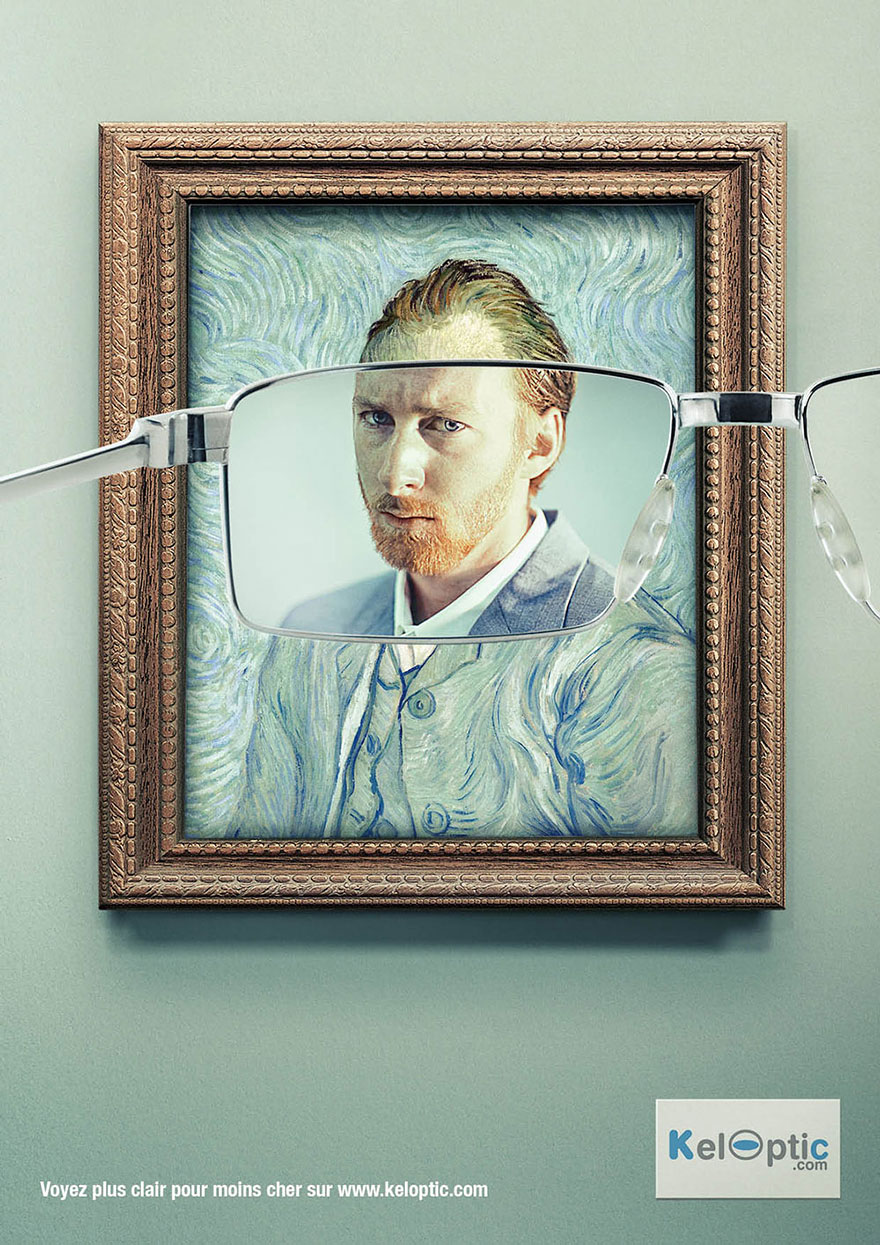
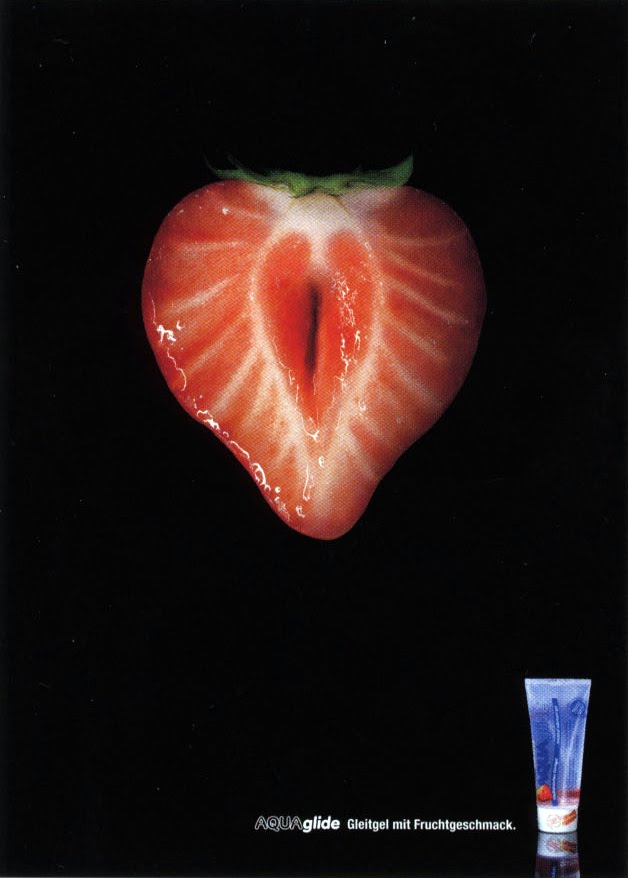
- Q1. Pick one of these three ads that appeals to you and explain explicitly in about 2-3 sentences how it communicates its message, and how it strengthens that message by figurative or non-literal use of the signs (images or words) it includes.
Phallic symbols in advertising
Q2:
- I'm sure that most or all of you know that a phallic symbol is a symbol of an erect male penis.
- When this is used in advertising, it usually suggests a penis, but isn't mean to be read as if that is all it is.
- Our task is to figure out why it is inserted into the text of an ad.
- It's often noted that a phallic symbol is, or can be, anything that is
longer than it is wide
- But that has to be too strongly worded ("sometimes a cigar is just a cigar"!)
- Some images can be interpreted either as a phallic symbol or not, depending on the desired interpretation the maker of the message wants to evoke in the onlooker.
- Compare these two webpages including images of the Washington Monument:
- Can you explain to your own satisfaction what the basis is for interpreting these two sets of images of the Washington Monument differently?
- While we are at this, here is another remarkably phallic public building, a major landmark in London (fondly known as the "Erotic Gherkin")
- Semiotics claims that an image functions as a phallic symbol only
if the communication of the overall message rests upon that interpretation
of the image
- However, this can be a subjective matter
- Here's a brief explication of the phallic symbol and its female equivalent
from The
Da Vinci Code
- Named most sexist ad of the year in a national context
- Here's an ad for one familiar brand
of beer.
- Here is another beer ad in which the makers present a phallic symbol, but go beyond it in the available interpretations!
- Q2. The instructor believes that this use of the phallic bottle image in the last ad above for Miller Genuine Draft inevitably leads to a further interpretation that makes this ad a stupid way to promote the product. (It's similar in some ways to the way Apple's Crush ad, shown in this week's lecture, led to the wrong interpretation from many potential customers and triggered a backlash.) Can you see and identify a negative aspect to holding and displaying the bottle like this?
Q3:
- Here there is no graphic phallic symbol per se, but the
message of the ad is all about the phallus
- The instructor observes that the array of opposites (night vs day, vegetarian vs Bacardi?) leads to a strong suggestion of sex.
- And what do the drops of liquid falling on the girl's belly represent, anyway? Your imagination can supply the answer.
- Why are these symbols, these signs so powerful?
- Well, people care a lot about sex.
- And sexual prowess or sexual identity has a lot to do with our feelings
of being full-fledged humans.
- Here are a few more pretty obvious phallic ads, mostly pretty brazen
stuff.
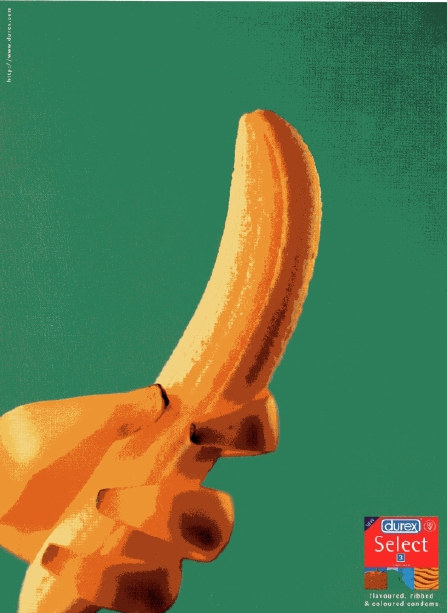
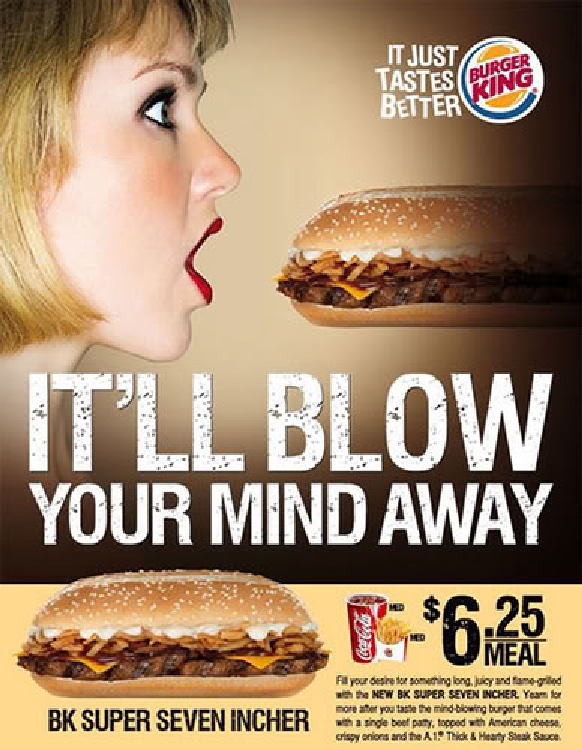
- Q3. Pick one of these last five ads that you think makes a relatively effective use of the phallic symbol to encourage the onlooker to appreciate the product, and explain why it has that effect. (You may feel that some of them are ineffective; in particular, the instructor really dislikes that Burger King ad, which ran only in Singapore some years ago. The model in the ad didn't know how they were using her photo, and she was really angry when she finally saw the ad.)
Q4:
- Here's a pretty remarkable movie clip that expresses the idea of why sexual imagery can be so strong in public consciousness
- In 2003 Jennifer Lopez and Ben Affleck made a widely despised movie (it has a 2.6 rating at imdb.com!) called Gigli. But it has one completely extraordinary scene, which you can play here:
- Q4. Explain in one paragraph what insights Ben and Jennifer's characters' attitudes provide into the reason why sexual ads are effective (or, at least, why ad-makers think they are effective).
Q5:
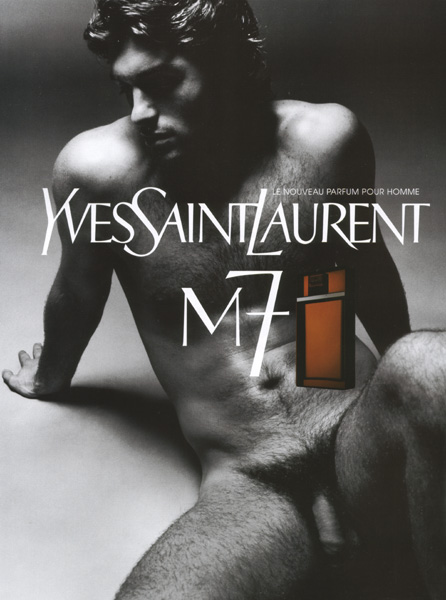
- Here's a fantastic interview with fashion designer and filmmaker Tom Ford on the meaning and aesthetic evaluation of the human body in advertisements. The three ads he spends the most time talking about are given below.
- 13-minute excerpt from the NPR cultural affairs program Fresh Air (he talks about the following three ads in this order in the first 7 minutes; I suggest opening them as they come up in the conversation while you listen to the clip).
- Q5. Terry Gross (the interviewer) and Tom Ford disagree in the interview on how sexual the content of these ads really is. Who do you agree with, and why?
- Women are not neglected by sexual symbols, even though they don't have
a prominent external phallus.
- So here's a different kind of reference to female
sex organs
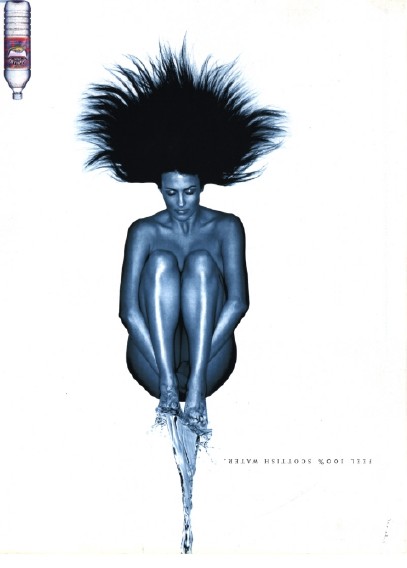
- The female equivalent of a phallic symbol is called a "yonic symbol".
- Here's one example
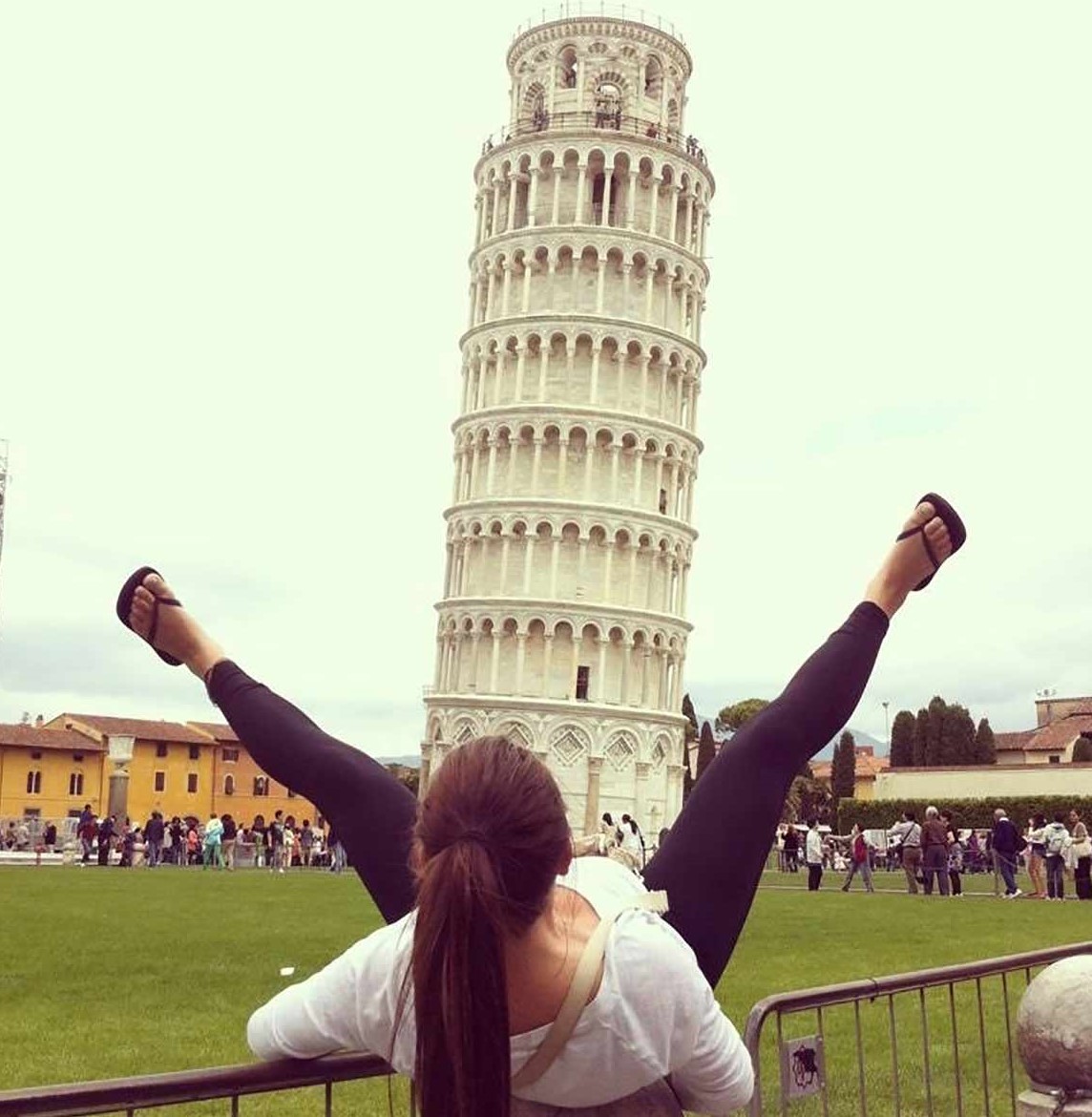
- To make this one more explicit visually, let's rotate it. Do you see the sexual reference now? (Think about the woman's hair in relation to the shape formed by her legs.)
- Do you think this interpretation is looking too hard for sexual references where they don't actually exist? If you think that, then I would encourage you to explain to me exactly how this image constitutes an advertisement for bottled water!
- Such signs reflecting female genitalia are more common than one might expect